Contact Us

Treasures of Knowledge & Practitioners

About

Articles & Information on Scientific & Practitioner Treasures

This page presents a collection of articles and information related to academic insights and professional practices, serving as a source of knowledge development and real-world perspectives contributed by academics and industry practitioners.


Newest Infromation

Building Tax Capacity

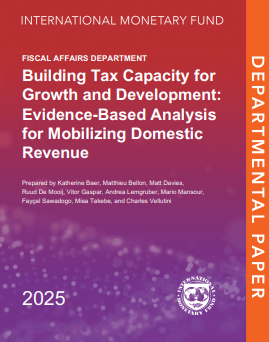
The IMF Departmental Paper (2025), entitled "Building Tax Capacity for Growth and Development," emphasizes that building tax capacity is a key foundation for countries to finance public services, infrastructure, social development, and deepen domestic financial markets. Empirical research indicates an economic tipping point when the tax-to-GDP ratio is in the range of 10 to 13 percent, with long-term economic growth tending to accelerate sharply after exceeding this threshold. Therefore, the 15 percent tax ratio threshold adopted in the Seville Commitment serves as a critical operational target for developing countries to ensure a stable economic transition. Countries that sustainably maintain their tax ratios above this threshold have been shown to record significantly higher per capita income growth over a decade than those that fail to maintain them. Nevertheless, the global challenges remain significant, with 71 developing countries currently operating below the 15 percent target of GDP, with no significant progress over the past decade. This group includes poor countries, resource-rich regions, and fragile and conflict-affected states, despite having significant potential to increase tax revenues by an average of 5 percent of GDP through comprehensive reforms. To address this challenge, an integrated tax system approach that combines tax policy, tax law, and revenue administration is needed. In terms of policy design, countries are advised to broaden the tax base by exempting and implementing incentives such as tax holidays that are considered ineffective, and to optimize indirect taxes such as VAT and excise taxes that are relatively easy to collect. Furthermore, compliance improvement should focus on taxpayer risk management by guaranteeing revenue from large businesses through the Large Tax Service Office (LTO) and by eliminating regulations for small businesses to encourage economic formalization. Finally, successful revenue mobilization is fundamentally a domestic political process that requires long-term commitment, leadership with integrity to build public tax morale, and gradual support from digital capacity and international technical assistance. (Read More https://bit.ly/3PRgRbj)